

















By Sanjay Panjwani, Managing Director, BatchMaster Software | Updated April 2026 | 8 min read
Quick Answer: Manufacturing is the process of transforming raw materials into physical, tangible goods using machinery and labor. Production is a broader concept — it includes manufacturing but also covers the creation of services, knowledge, and intangible outputs. In short, all manufacturing is production, but not all production is manufacturing.
Many business professionals use “manufacturing” and “production” as though they mean the same thing. In casual conversation, that overlap is harmless. But for companies managing production workflows, selecting an ERP system, or planning supply chains, the distinction matters enormously. This guide breaks it down — clearly, with industry examples relevant to process manufacturers.
What Is Manufacturing?
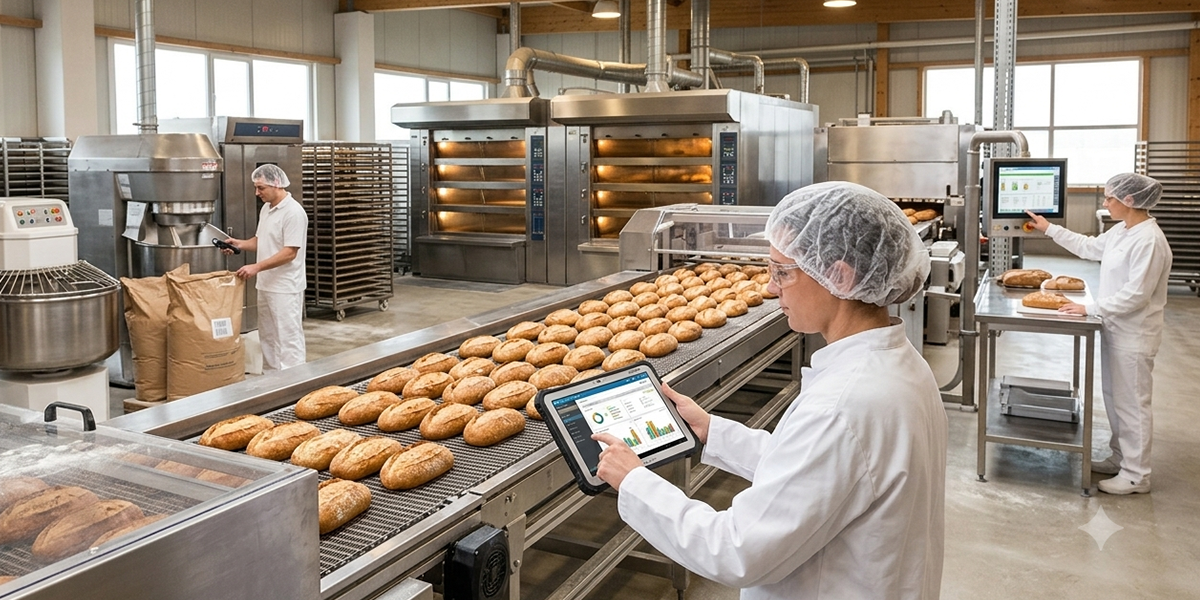
Manufacturing is the physical transformation of raw materials or components into finished, tangible products using machinery, labor, and systematic processes. It is always the creation of something you can touch, package, and ship.
Defining Characteristics of Manufacturing
- Tangible output only: The result is always a physical product — a medicine, a food item, a chemical, a car.
- Raw material transformation: Inputs (ingredients, chemicals, metals) are converted into something fundamentally different from what they started as.
- Capital-intensive: Manufacturing typically requires machinery, equipment, formulas, BOMs (bills of materials), and quality control systems.
- Regulated and traceable: Most manufacturing industries — especially pharmaceuticals, food, and chemicals — are subject to regulatory frameworks like FDA, FSSAI, or GMP standards.
Real-World Manufacturing Examples
- Pfizer — converts chemical compounds into certified medicines via controlled batch manufacturing processes.
- Nestlé — transforms agricultural raw materials (cocoa, milk, wheat) into packaged food products.
- Asian Paints — formulates resins, pigments, and solvents into finished paint products.
- Sun Pharma — manufactures Active Pharmaceutical Ingredients (APIs) and formulations through tightly controlled batch runs.
What Is Production?
Production is the broader economic process of converting any set of inputs — raw materials, labor, technology, capital, or knowledge — into outputs that have value. Production includes manufacturing, but extends to services, agriculture, software, and any activity that generates something of worth.
Defining Characteristics of Production
- Tangible or intangible outputs: Production can result in physical goods or services (banking, consulting, software).
- Not always machinery-dependent: A software developer writing code is engaged in production. So is a teacher delivering a lecture.
- Broader economic scope: Production is studied in economics as the foundation of national output (GDP).
- Value creation is the core goal: What defines production is that inputs are used to create something more valuable than they were individually.
Real-World Production Examples (Non-Manufacturing)
- IT Services (Infosys, TCS) — produce software and technology services without physical goods.
- Construction (L&T) — produces buildings and infrastructure (borderline: involves physical output but not raw material transformation in the manufacturing sense).
- Banking (HDFC, ICICI) — produces financial services and transactions.
- Agriculture (ITC Agribusiness) — produces food crops and commodities, but through cultivation, not manufacturing.
Manufacturing vs. Production: Side-by-Side Comparison
| Criteria | Manufacturing | Production |
|---|---|---|
| Scope | Narrow — physical goods only | Broad — goods + services + knowledge |
| Output type | Always tangible (products) | Tangible or intangible |
| Machinery required | Yes — always | Not necessarily |
| Raw material | Always required | Not always (services don’t use raw materials) |
| Industries | Pharma, food, chemicals, paints, cosmetics, auto | Banking, IT, agriculture, education, construction |
| Regulatory oversight | Often heavy (FDA, FSSAI, GMP) | Varies widely by sector |
| ERP focus | BOM, formulation, batch records, shop floor control | Resource allocation, service delivery, scheduling |
| Key metric | OEE, yield, batch cycle time, scrap rate | Resource utilization, output volume, service quality |
| Subset of the other? | ✅ Manufacturing is a subset of production | ❌ Production is not a subset of manufacturing |
Types of Production in Manufacturing
Within manufacturing, there are several distinct types of production. Understanding which type applies to your business is critical for selecting the right ERP and production planning approach.
1. Batch Production
Products are made in defined groups (batches). Common in pharmaceutical manufacturing, food production, paint, and cosmetics. Each batch follows a specific formula or recipe, and complete records are maintained for traceability and compliance.
2. Continuous / Flow Production
Raw materials flow continuously through a production process without stopping. Common in chemicals, oil refining, and large-scale food processing. Offers high efficiency but limited flexibility.
3. Job / Custom Production
Each product is made individually to customer specification. Common in specialty chemicals, custom flavors and fragrances, or contract pharmaceutical manufacturing.
4. Mass Production
High-volume, standardized goods produced continuously. Common in consumer packaged goods (CPG), beverages, and industrial chemicals.
BatchMaster Insight: Process manufacturers — those producing formulated goods like medicines, paints, food, or cosmetics — predominantly use batch or continuous production. BatchMaster ERP is purpose-built for these production types, managing formulas, batch records, lot traceability, and compliance requirements in a single platform.
Why the Distinction Matters in Practice
For Operations & Planning Teams
Manufacturers need to track raw material consumption per batch, machine utilization, and yield rates. Service-production teams focus on workforce scheduling, capacity, and delivery timelines. Conflating the two leads to misaligned KPIs and poor resource planning.
For ERP Selection
A manufacturer selecting an ERP system needs modules for formulation management, Bills of Materials, quality control, and lot traceability — none of which are needed by a pure service-production company. Choosing a generic ERP designed for service businesses creates enormous gaps for manufacturers.
For Regulatory Compliance
Manufacturing — particularly in pharma, food, and chemicals — carries strict regulatory requirements: FDA 21 CFR Part 11 compliance, GMP records, FSSAI standards. Production in service industries has entirely different compliance requirements. The correct classification determines which regulatory frameworks apply to your business.
For Financial Reporting & Costing
Manufacturing businesses use standard costing, variance analysis, and material cost tracking per batch. Service-production businesses use project-based costing and labor rate analysis. Mixing these frameworks creates inaccurate financial reporting.
Frequently Asked Questions
1. What is the main difference between manufacturing and production?
Manufacturing specifically refers to creating physical, tangible goods by transforming raw materials using machinery and labor. Production is a broader concept that encompasses manufacturing as well as the creation of services, knowledge, and other intangible outputs. All manufacturing is a form of production, but not all production involves manufacturing.
2. Is manufacturing a subset of production?
Yes. Manufacturing is a specific subset of production. Production is the overarching concept covering any process that converts inputs into valuable outputs — including manufacturing, agriculture, services, and more. Manufacturing sits within this broader category, focused exclusively on physical goods.
3. Can production exist without manufacturing?
Absolutely. Software development, banking, education, healthcare consulting, and logistics are all forms of production that involve no physical manufacturing. These industries create value through services, knowledge, or information — not by transforming raw materials into physical goods.
4. What are the types of production in manufacturing?
The four main types of production in manufacturing are: (1) Batch production — making products in defined groups, common in pharma and food; (2) Continuous/flow production — uninterrupted production, common in chemicals; (3) Job production — custom items made one at a time; and (4) Mass production — high-volume standardized goods. Process manufacturers primarily use batch or continuous production types.
5. What is the difference between manufacturing and production in pharma?
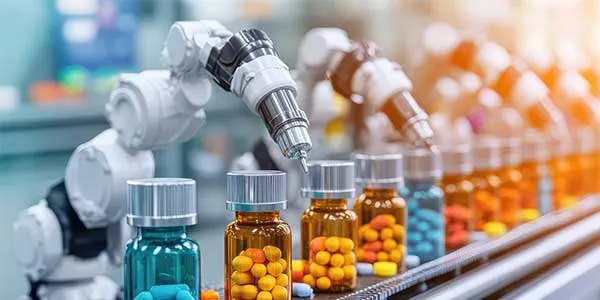
In the pharmaceutical industry, manufacturing refers to the controlled physical creation of drug substances and drug products — tablets, capsules, injectables — following GMP guidelines and batch records. Production in pharma is a broader operational term that includes not just the making of drugs but also the planning, scheduling, quality assurance, packaging, and supply chain activities surrounding that process.
6. How does ERP software support both manufacturing and production?
A manufacturing ERP like BatchMaster provides dedicated modules for both: for manufacturing, it handles formulation, BOMs, batch records, quality control, and compliance; for production management broadly, it handles production scheduling, resource planning (MRP/MPS), inventory, costing, and shop floor visibility. This unified approach eliminates silos between manufacturing execution and overall production operations.
7. Is service delivery considered production?
Yes. In economics and business management, service delivery is a form of production. When a bank processes a loan, a hospital treats a patient, or a software company ships a product update, they are engaged in production — converting labor, technology, and capital into a valuable output for customers.
8. Which industries use batch production vs. continuous production?
Batch production is dominant in pharmaceuticals, specialty chemicals, food and beverages, cosmetics, and paint manufacturing — industries where recipes/formulas vary per run and traceability per batch is required. Continuous production is common in petroleum refining, commodity chemicals, bulk food processing (flour, sugar), and cement manufacturing, where consistent high-volume output is the priority.
Conclusion
The difference between manufacturing and production is not merely semantic — it shapes how businesses plan operations, select software, ensure compliance, and measure performance. Manufacturing is a physical, machinery-driven process of making tangible goods. Production is the broader economic activity of creating value from inputs, whether those outputs are goods or services.
For process manufacturers — in food, pharmaceuticals, chemicals, cosmetics, and paints — getting this distinction right is the foundation of operational excellence. Aligning your ERP system to your specific type of production (batch, continuous, or job-based) is what separates businesses that scale from those that struggle with inefficiency, compliance gaps, and poor cost visibility.
Ready to align your manufacturing and production processes? Schedule a free BatchMaster ERP demo and see how 3,000+ process manufacturers worldwide have streamlined their operations.