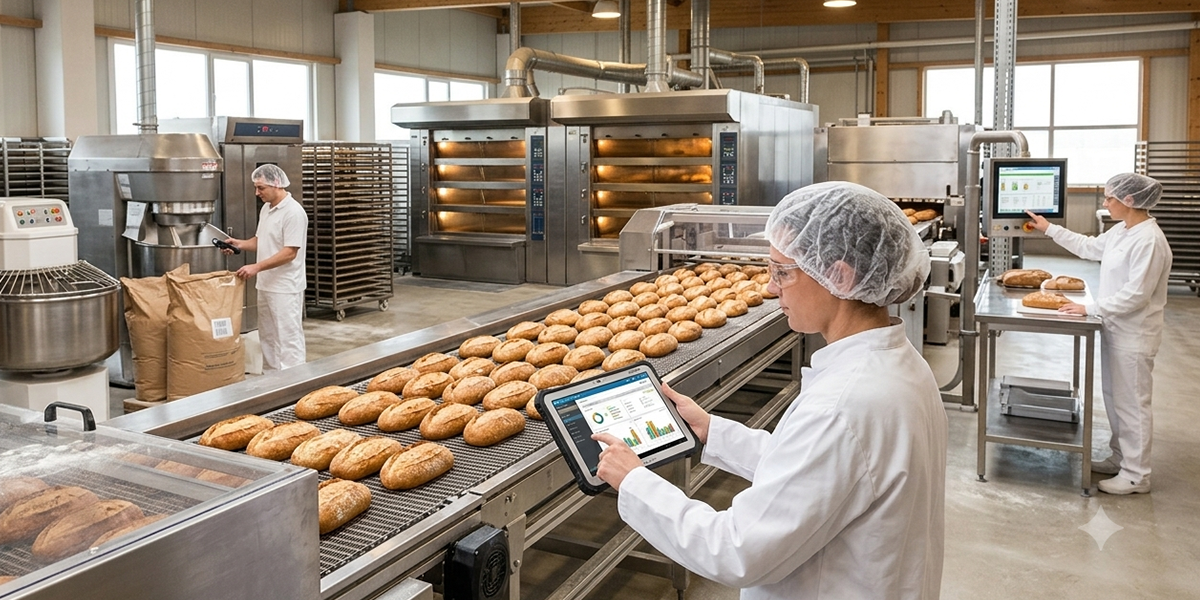





















I still remember hearing my parents talk about ledger books, manual registers, and long nights spent closing accounts. Back then, moving from paper to spreadsheets felt revolutionary. I often imagined a future where machines would handle repetitive work so people could focus on better decisions.
That future arrived with ERP automation—and now, we’ve moved even further.
Today, manufacturing is entering the era of intelligence, where ERP systems don’t just execute tasks but learn, predict, and guide decisions. This shift is redefining how modern manufacturers operate, compete, and grow.
What Is AI-Powered ERP?
AI-powered ERP is an enterprise resource planning system that uses artificial intelligence and machine learning to analyse data, predict outcomes, detect anomalies, and recommend actions—going far beyond traditional rule-based automation.
Unlike traditional ERP systems that follow predefined workflows, AI-driven ERP systems continuously learn from historical and real-time data to help manufacturers respond faster, reduce risk, and optimise operations across the value chain.
The Evolution of ERP: From Record-Keeping to Decision Intelligence
Enterprise Resource Planning began as a way to centralise finance, inventory, and operational data. Over time, ERP matured into a platform for standardising processes, enforcing controls, and improving visibility across departments.
With the rise of cloud ERP, businesses gained real-time insights instead of relying on disconnected spreadsheets and delayed reports. Automation became the foundation of efficiency—but it also exposed its limitations.
How ERP Automation Transformed Manufacturing Operations
ERP automation replaced manual, error-prone tasks with consistent, rule-based workflows. It significantly improved operational reliability and speed.
Key benefits of ERP automation included:
- Improved process efficiency through automated workflows
- Lower operating costs by reducing manual effort and rework
- Centralised, real-time data that eliminated silos across departments
Automation-enabled ERP systems to:
- Generate invoices automatically
- Trigger inventory reorders at predefined thresholds
- Initiate purchase requisitions and approvals
However, automation only works within fixed rules. It cannot adapt, learn, or anticipate change—making it insufficient for today’s unpredictable manufacturing environment.
Automation vs Intelligence: What’s the Real Difference?
Automation vs Intelligence: What’s the Real Difference?
- Rapidly changing customer expectations
- Evolving regulatory requirements
- Volatile supply chains
- Accelerated technological innovation
To stay competitive, businesses need ERP systems that do more than execute rules—they need systems that can think, learn, and recommend actions.
Automation vs Intelligence in ERP Systems
| Capability | Traditional ERP (Automation) | AI-Powered ERP (Intelligence) |
|---|---|---|
| Core Function | Executes predefined rules | Learns, adapts, and recommends |
| Decision-Making | Reactive and rule-based | Predictive and proactive |
| Data Handling | Structured data only | Structured + unstructured data |
| Flexibility | Fixed configurations | Context-aware and adaptive |
| Examples | Auto invoicing, reorder triggers | Forecasting, anomaly detection, NLP insights |
| Human Role | Oversight and exception handling | Strategic decision-making with AI support |
| Outcome | Faster processes | Smarter, optimised operations |
In simple terms:
Automation executes tasks. Intelligence elevates decisions.
How AI-Powered ERP Is Transforming Manufacturing Industries
AI is reshaping manufacturing by embedding intelligence into every stage of operations.
By analysing data from machines, production lines, suppliers, and demand signals, AI-powered ERP systems can:
- Detect early signs of operational risks
- Improve demand forecasting accuracy
- Optimise production scheduling and resource allocation
Smarter Maintenance and Quality Control
AI enables a shift from routine maintenance to condition-based maintenance, predicting equipment failures before they occur. This reduces downtime, extends machine life, and lowers maintenance costs.
Quality control also becomes proactive. AI can detect defects and abnormal trends in real time, improving consistency and reducing rework.
When this intelligence is integrated into ERP, manufacturers gain end-to-end visibility, faster insights, and better decisions across the organisation.
Why AI-Powered ERP Matters in Process Manufacturing
AI-enabled ERP helps process manufacturers move beyond automation into real-time intelligence—improving forecasting, quality, compliance, and profitability across the production lifecycle.
Smarter Formulations That Adjust Automatically
AI analyses historical batches and quality results to recommend optimal formulations—even when raw-material quality, strength, or cost fluctuates.
Demand Forecasting You Can Trust
AI goes beyond historical sales data by analysing seasonality, market behaviour, weather patterns, and consumption trends to deliver accurate demand forecasts.
Early Alerts Before Issues Occur
Instead of reporting failures after the fact, AI monitors process variables such as temperature, pH, and mixing times to detect deviations early—preventing costly batch failures.
Quality and Compliance on Auto-Pilot
AI scans specifications, lab results, SOPs, and regulatory requirements to flag risks instantly—keeping manufacturers audit-ready with minimal manual effort.
Predictive Maintenance That Prevents Downtime
AI continuously tracks equipment health indicators and predicts failures before production stops—critical for batch and continuous manufacturing environments.
Inventory Decisions Made with Foresight
By considering shelf life, expiry dates, supplier reliability, and lead times, AI recommends what to buy, when to buy, and how much—preventing shortages and excess stock.
AI Assistants That Guide Every Step
AI-powered ERP assistants provide step-by-step guidance for production, quality, planning, and procurement—making complex processes easier and reducing user errors.
Real-Time Cost and Margin Intelligence
AI analyses material, energy, labour, and yield data in real time to reveal true costs, flag margin risks early, and recommend actions that protect profitability without compromising quality or compliance.
BatchMaster ERP with AI: Intelligence Built for Process Manufacturing
BatchMaster ERP brings AI directly into the core of process manufacturing operations. Designed specifically for formula- and recipe-based industries, it embeds AI and business intelligence across production, quality, planning, and supply chain workflows.
Available on the web, BatchMaster ERP delivers AI-driven insights, real-time dashboards, and faster decision cycles, helping manufacturers improve accuracy, transparency, and operational agility.
Key AI Capabilities in BatchMaster ERP
AskBME – AI Assistant
Ask questions in plain language and get instant guidance on workflows, processes, and best practices.
AI Sales Forecasting
Predict demand accurately, reduce stockouts and overstocking, and improve customer satisfaction.
AI Net Cash Flow Forecasting
Anticipate cash flow, plan finances better, and avoid unexpected shortfalls.
AI-Driven Product Formulation
Get intelligent formulation recommendations, reduce R&D errors, and accelerate product launches.
For manufacturers evaluating AI-powered ERP solutions, BatchMaster positions itself as a platform where intelligence is embedded at every stage of the manufacturing lifecycle.
Final Thoughts: From Automation to Intelligence
Manufacturing has evolved from manual ledgers to automation—and now to intelligence.
- With AI-powered ERP systems, businesses can:
- Understand operations in real time
- Predict future outcomes
- Detect risks before they escalate
- Make smarter, faster decisions
- Operate with confidence in volatile markets
This isn’t the future—it’s happening now.
Manufacturers that adopt AI-driven ERP early will define the next decade of operational excellence and growth.
Ready to move from automation to intelligence?
Explore how BatchMaster’s AI-enabled ERP can transform your manufacturing operations. Request a personalised demo or consultation today.